University of Exeter · Final MSc hackathon · Team Transakt
Blockmediary
I led product ideation, coordinated our six-person team, produced the pitch script and deck, and directed frontend delivery for this stablecoin trade prototype.
- My role
- Frontend & Project Lead
- Format
- Final academic hackathon
- Award
- Most Innovative IdeaFinTech West Student Showcase 2026
Project brief
A cross-border trade project built around stablecoins
Our team, Transakt, built Blockmediary for the final hackathon on the University of Exeter’s MSc Financial Technology programme. The hackathon served as our final project in place of a traditional dissertation. Blockmediary placed first in the MSc cohort and later won the Most Innovative Idea award at the FinTech West Student Showcase 2026.
As Frontend & Project Lead, I helped shape the idea, coordinated delivery across the six-person team, produced the pitch materials and directed the interface work that brought the product together.
My contribution
I led the project from idea to pitch and prototype
My role combined product direction, team coordination, pitch development and hands-on frontend delivery.
Led product ideation
I helped define the stablecoin escrow proposition for SMEs underserved by letters of credit and kept the concept focused on a clear cross-border trade problem.
Coordinated the six-person team
I kept product, smart contract, backend and frontend work aligned so the separate workstreams converged into one coherent prototype.
Produced the pitch narrative
I wrote the full pitch script and built the deck, turning the problem, product logic and value proposition into a clear story for the judges.
Directed frontend delivery
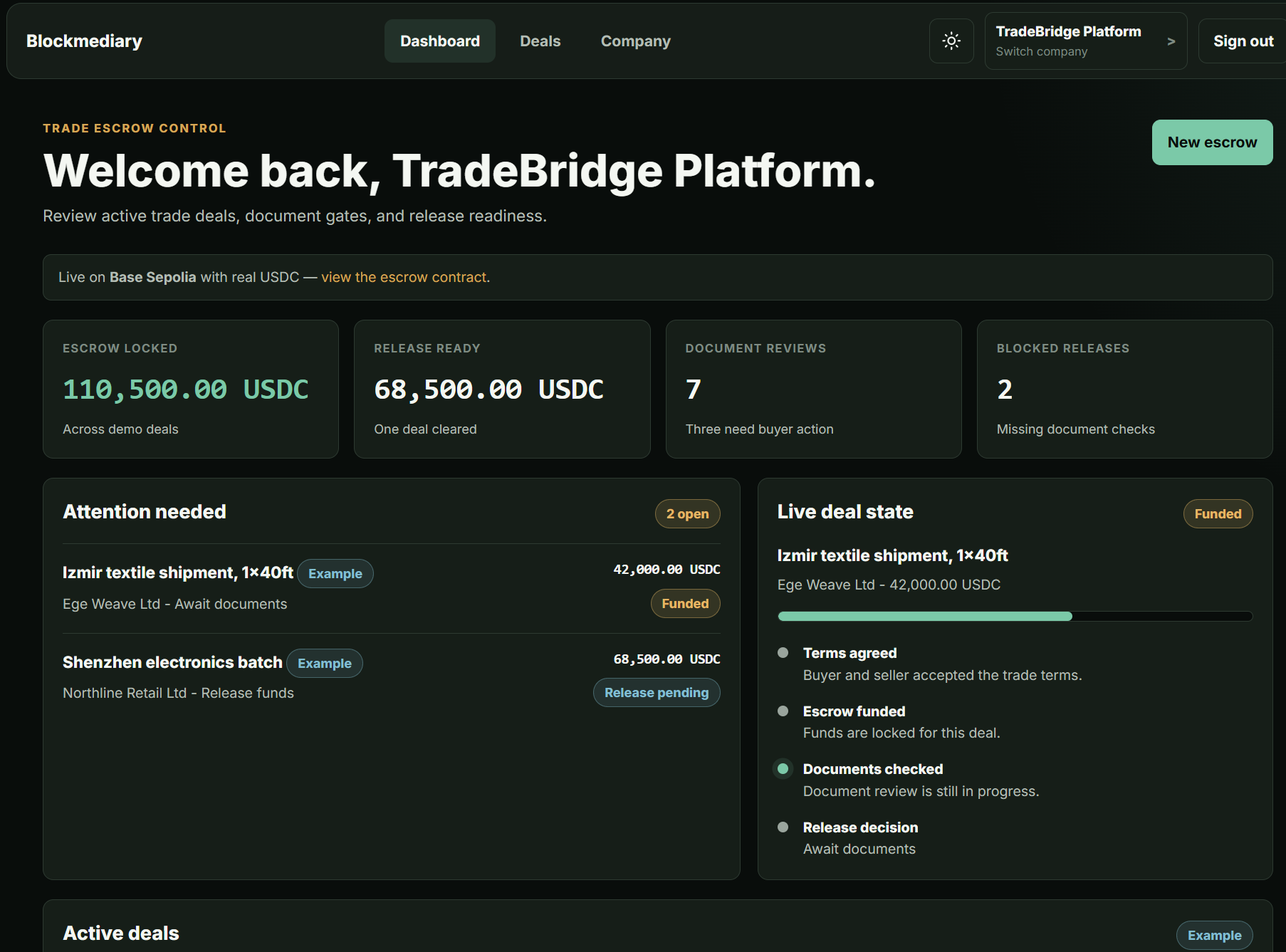
I translated product and technical requirements into buyer and seller dashboards for deal tracking and document-based milestone approvals.
Frontend decisions
The questions I worked through
The contract supplied the rules. The frontend still needed to explain them without asking the user to understand blockchain terminology.
Current stateShow where the deal stands
I converted backend status into a readable explanation, progress indicator and next step.
User roleGive the action to the right person
I separated buyer and seller controls so the page did not present actions to the wrong party.
Backend resultKeep the screen aligned with the backend
I checked that the UI updated from the deal record after each backend action.
Selected interface work
From the landing page to the dashboard
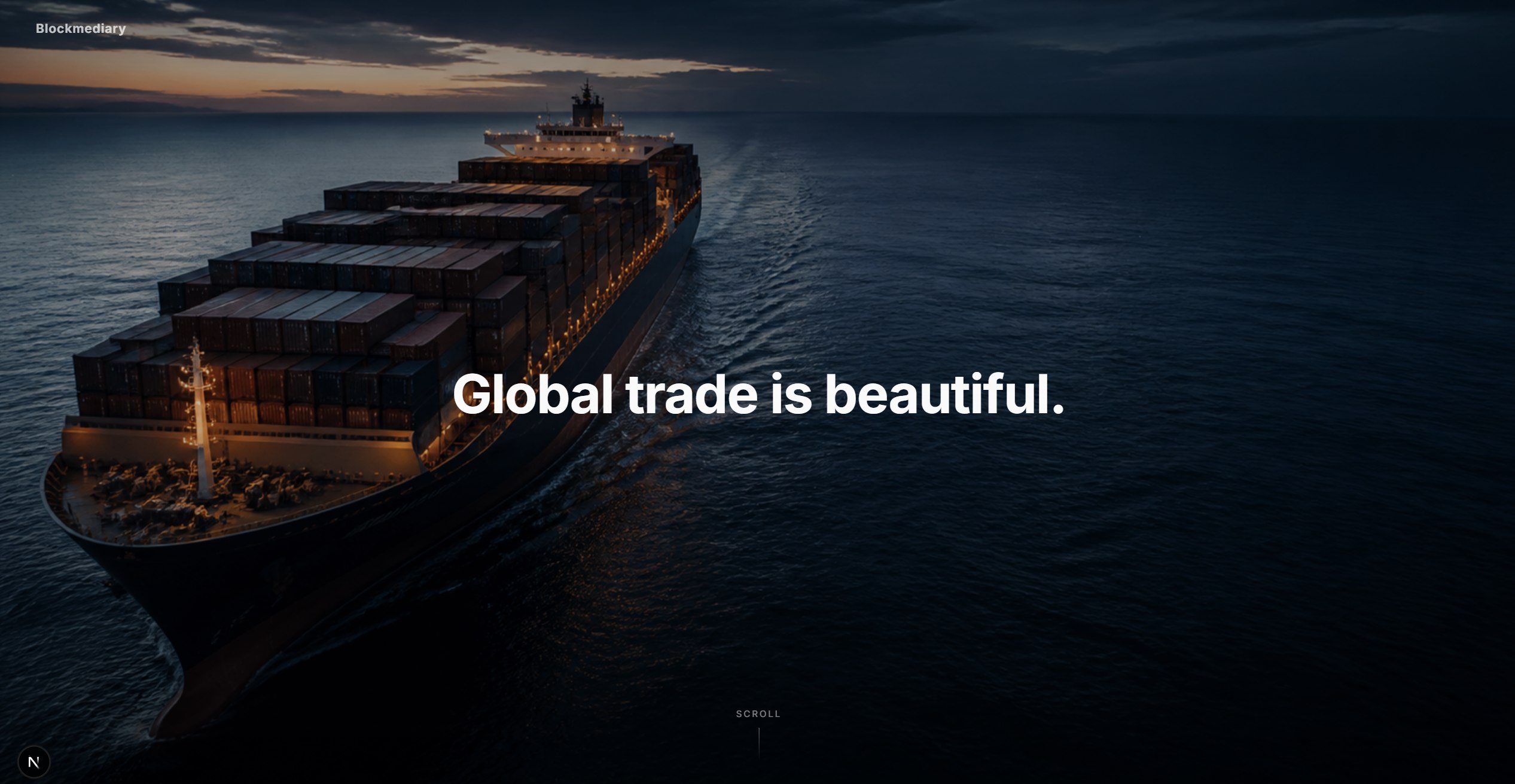
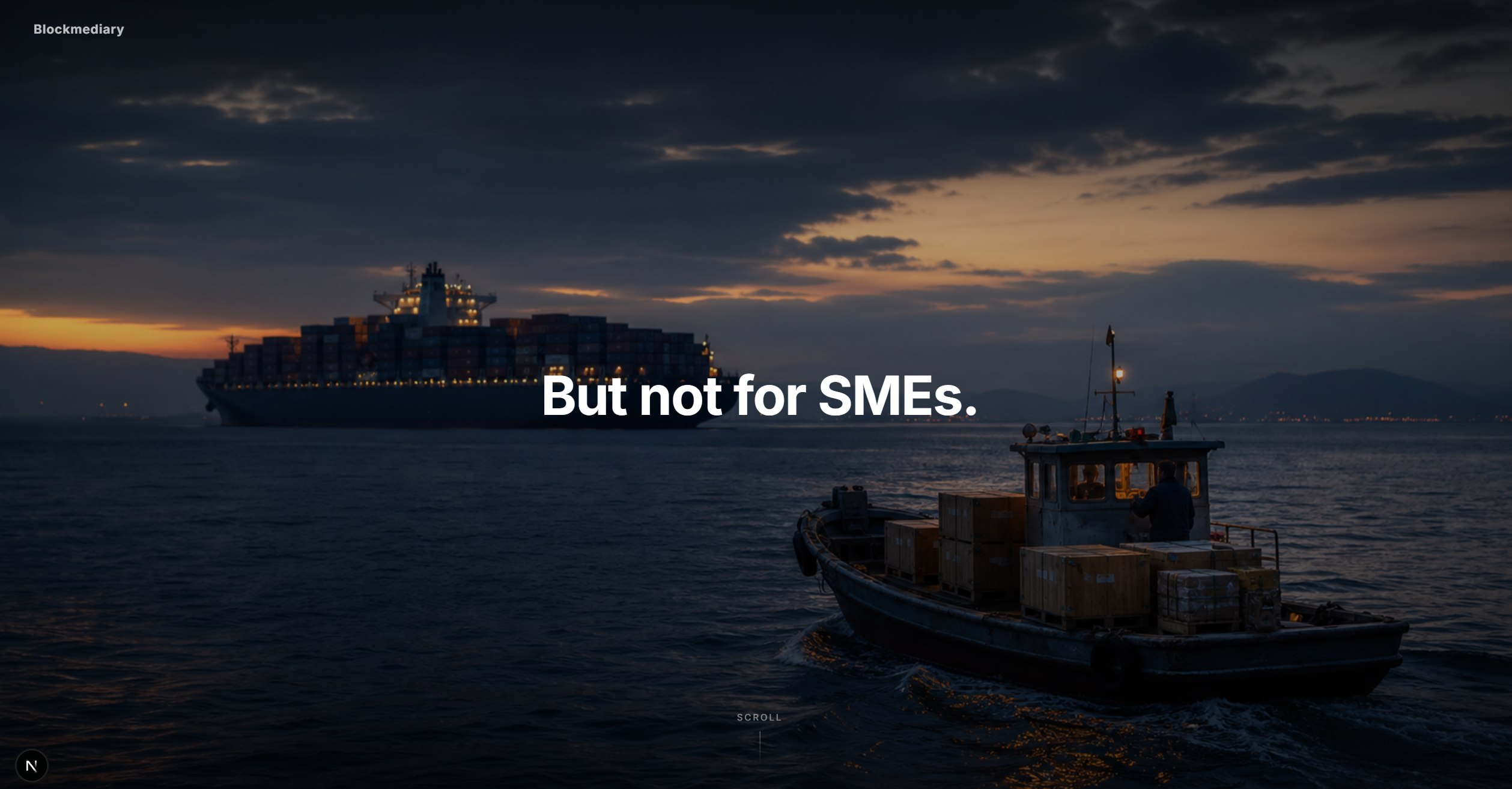
These screens show the visual direction and the dashboard I helped shape around live deal status, attention items and user actions.
Team leadership
I kept the team moving toward one product
Our six-person team divided the work across product research, smart contracts, backend development and the interface. I coordinated those contributions around the shared product direction and final pitch.
I also stayed close to implementation, translating technical decisions into the frontend flow and keeping the prototype, deck and narrative consistent with one another.